The short answer
Your sales records and your customer list should belong to your business, but that depends on the contract you sign, not on the software. Before you choose a POS system, ask in writing whether the company sells or shares your data, uses it to lend or market, lets you download all of it at any time, and what happens to it if you stop paying.
Key takeaways
- Your sales history and customer list are worth money to lenders, suppliers and marketers, not only to you.
- Who owns that data is decided by the contract, so read it and ask questions in writing.
- You should be able to download everything yourself, at any time, in a format Excel can open.
- If you stop paying, your records should stay yours: never locked, never deleted without warning.
- Your customers' phone numbers are personal data. Keep them safe and use them only for what customers expect.
Every sale you ring up adds to a record that nobody else has: what sells on a Saturday, which customers buy on credit and pay back, which stylist keeps her clients, how much Milo leaves the shelf before school reopens. After a year, that record is one of the most valuable things your business owns.
It is valuable to other people too. That is why, before you pick a till, it is worth asking a simple question: who owns the data once it is in the system?
Why is your sales data worth something to someone else?
Because it shows exactly how a business trades, day by day. That is useful to people who want to sell to you, lend to you or reach your customers.
- Lenders can use months of real sales to decide who to lend to and at what rate. A company that sees your till can make you a loan offer, or pass the record to someone who will.
- Suppliers and distributors want to know what sells, in which town, at what price. Sales from thousands of shops tell them where to push stock and how to price it.
- Marketers want phone numbers. A list of a salon's regular clients, or a pharmacy's customers, is exactly the list they would like to send messages to.
None of this is unusual. It is how some low-cost or free systems pay their bills. The question is whether you know about it and agreed to it.
Who owns the data in a POS system?
Whoever the contract says owns it. The software does not decide; the terms and conditions you accept do. Some say the data is yours and the company only stores it for you. Others give the company a right to use your data, often described as "aggregated" or "anonymised", for its own purposes.
Your customers' details are a separate matter. In Ghana, personal information such as names and phone numbers is covered by the Data Protection Act, 2012 (Act 843), which set up the Data Protection Commission. The Commission says that all data controllers and processors must register with it. If you keep customer records, it is worth reading what the Commission asks of businesses like yours, and asking any software company you use whether it is registered.
What should you ask a POS company before you sign?
Ask these questions, and ask for the answers in writing (a WhatsApp message counts). A company that is comfortable with its answers will give them quickly.
- Do you sell or share my sales or customer data with anyone?
- Do you use my data to offer loans, adverts or other products?
- Can I download all my data myself, at any time, and in what format?
- What happens to my data if I stop paying?
- Where is it stored, and how often is it backed up?
- Who at your company can see my records?
- If I leave, will you delete my data, and when?
What good answers sound like
| Question | A good answer | A warning sign |
|---|---|---|
| Do you sell or share it? | "No. We store it for you and nothing else." | "Only in anonymised form." |
| Can I download it? | "Yes, all of it, from your own screen, whenever you like." | "Ask support and we will send a file." |
| If I stop paying? | "Your records stay. You can still download them." | "The account is closed after 30 days." |
| Loans or adverts? | "We don't do either." | "We partner with lenders to offer you credit." |
What are the warning signs?
The biggest warning sign is a business model you cannot explain. If a system is free, with no fees you can see, ask how the company earns money. Sometimes the answer is fine, such as a paid add-on you might buy later. Sometimes it is your data.
Other signs to look for:
- Export only through support. If you can't download your own records without asking, you don't fully control them.
- Exports that leave things out. A product list alone is not your data. You need sales, customers, balances, suppliers and stock too.
- Lock-out on late payment. If a missed payment stops your till or hides your records, the company is holding your data as leverage.
- Vague words in the terms. Phrases like "improve our services" or "work with partners" can cover almost anything. Ask what they mean.
Your customers' numbers are not yours to sell either
The same care you expect from a software company, your customers expect from you. A customer who gives you a phone number for a delivery or a booking reminder expects to get exactly that. They don't expect messages from strangers.
Keep these simple rules:
- Use numbers for what customers expect: receipts, bookings, reminders and debts they know about.
- Limit who can see them. A cashier needs to find a customer at the till, not download the whole list.
- Don't hand the list to anyone, however friendly the offer.
- Check the Data Protection Commission's guidance if you send marketing messages or keep a large customer list.
How MPOS handles your data
We wrote our rules down so you don't have to ask.
- We don't sell your data, lend against it or build a business on it. You pay for the software, so the software is the product. We don't use your customer list for our own marketing.
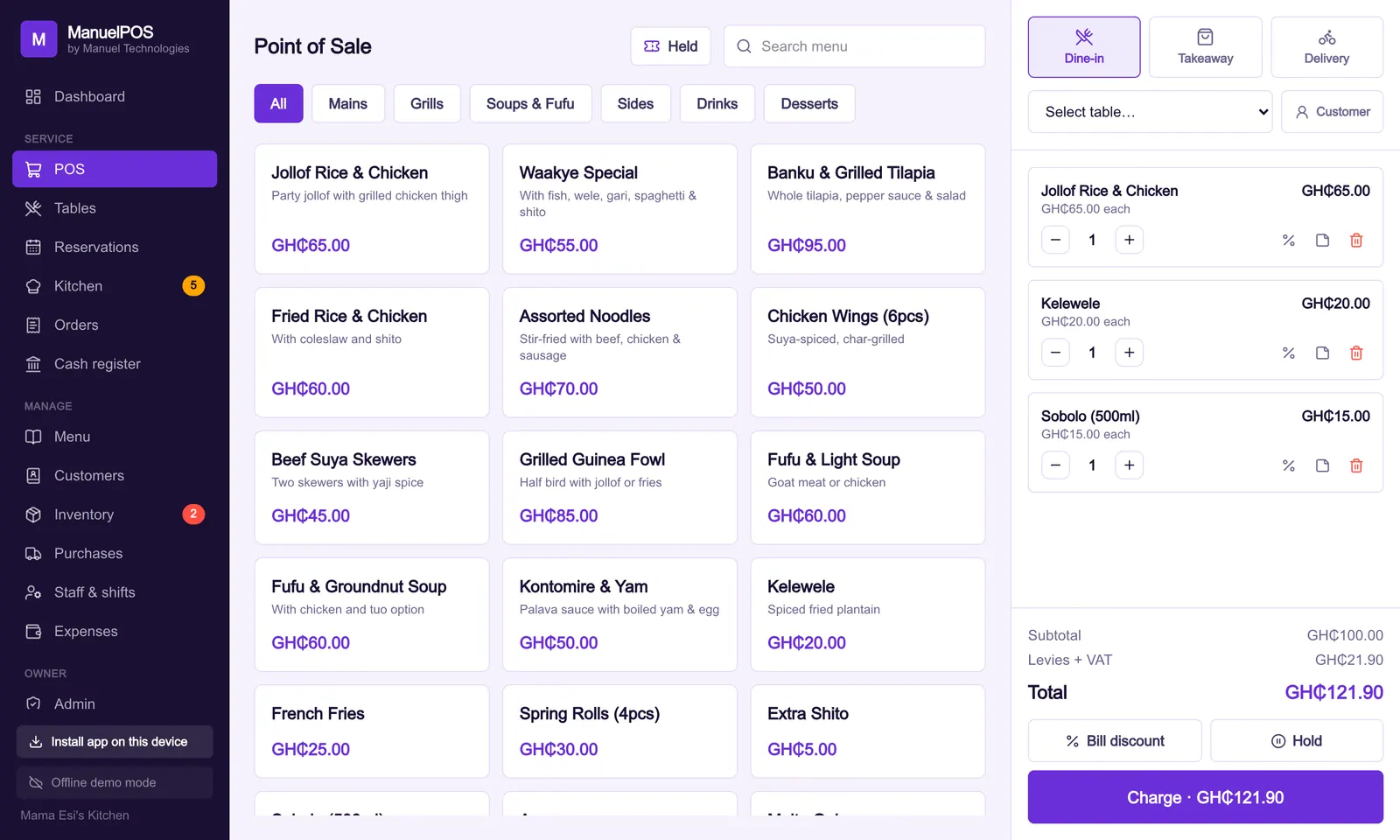
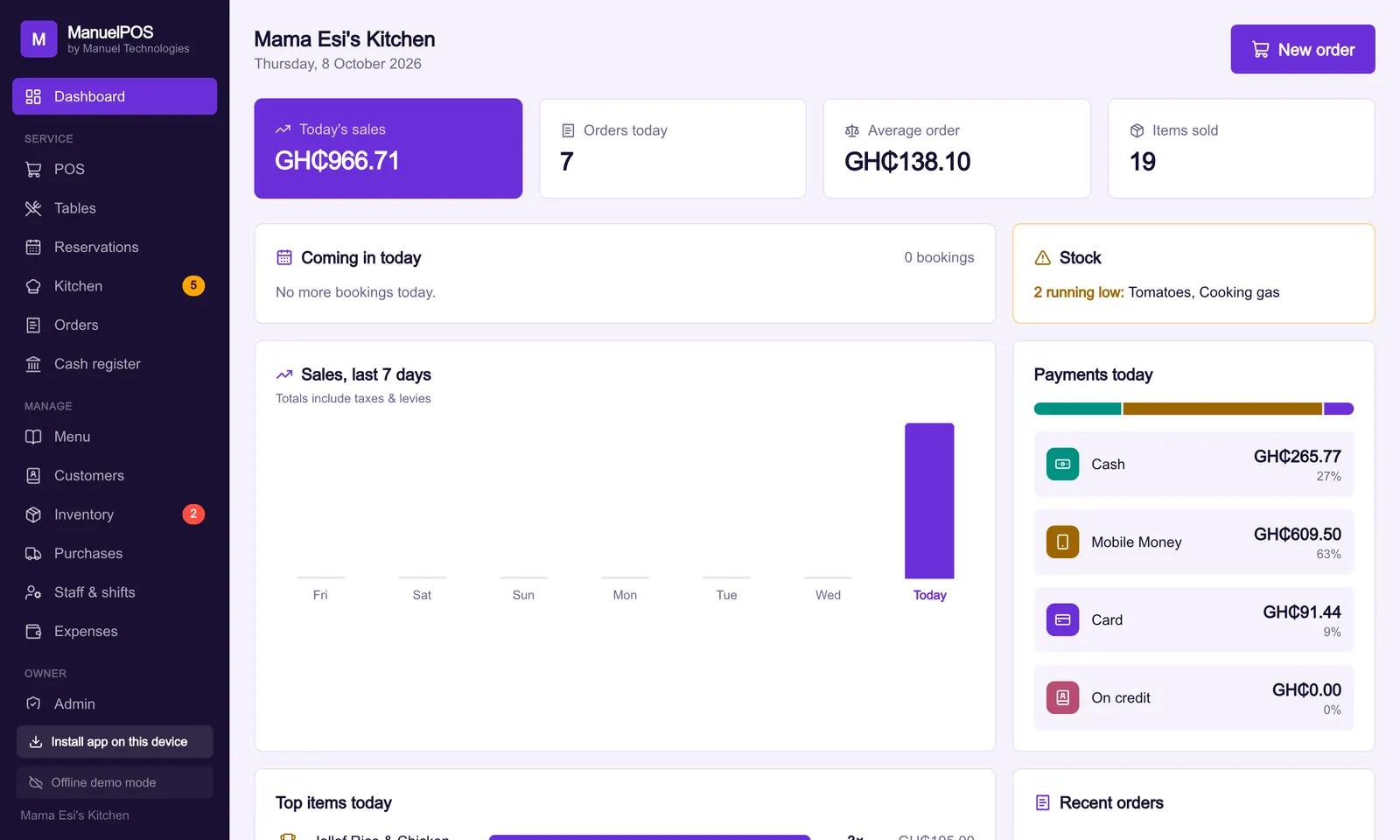
- You can download everything yourself. The owner can download a full backup at any time: products, customers, suppliers, stock, staff, ledgers, settings and the sales, purchases and expenses of the years you choose. It comes as one file, or as a set of lists that open in Excel.
- A late renewal never locks your records. If a yearly renewal is late, the till keeps selling and nothing is deleted.
- Staff see only what their role needs. Owners see reports and the whole business; cashiers see the till.
- If you close your account, you can ask for an export first, and we then delete the business's records, except anything the law makes us keep, such as payment records.
The full details are in our privacy notice.
What to do next
Look at the system you use now. Find its export button and try to download your sales and your customer list. If you can't, or the file is missing half of what you need, ask the company the seven questions above.
If you are choosing a system, put the same questions next to price and features when you compare. Our guide on how to choose a POS system in Ghana has the rest of the checklist. And if you would like to see how MPOS does it, you can start a free trial and download your own backup on day one.
See it with your own products
Free for 14 days. No card needed. Works on the phone or laptop you have.
Sources
FAQ
Frequently asked questions
Quick answers to what business owners ask us about this.
Who owns the data in a POS system?
Whoever the contract says. Some terms say the data belongs to you and the company only stores it; others give the company a right to use it for its own purposes. Read the terms and ask in writing before you sign.
Can a POS company sell my sales data?
Only if your contract allows it. Many contracts allow the company to use or share data in 'anonymised' or 'aggregated' form. Ask directly whether they sell or share your data with anyone, including lenders and suppliers.
How do I get my data out of my POS system?
Look for an export or backup option in the owner's settings. A good system lets you download sales, customers, balances, products, suppliers and stock yourself, in a format Excel can open, without asking support.
What happens to my data if I stop paying for my POS?
It depends on the provider. Some close the account and delete data after a few weeks; others keep your records and let you download them. Ask before you sign. With MPOS, a late renewal never deletes anything and the till keeps selling.
Do I need to register with the Data Protection Commission?
The Data Protection Commission says all data controllers and processors must register with it. If your business keeps customer records, check the Commission's registration guidance to see what applies to you.
Does MPOS sell my data or offer loans based on it?
No. MPOS does not sell your data, lend against it or use your customer list for marketing. You pay for the software, and the owner can download a full backup at any time.
Still have a question?
Talk to the team on WhatsApp: real people in Ghana who know your kind of business.
About the author
Emmanuel Akyeam is the founder of Manuel Technologies in Ghana, which builds MPOS: the till, bookings and stock system for restaurants, salons, barbershops and shops. He works directly with business owners to set up their systems.
You may also like
- Running a business
POS installation and training: what to prepare and what to expect
What a proper POS setup day looks like, what to have ready before the visit, how to train each member of staff, and the questions to ask whoever installs it.
2 November 2026 · 6 min read
- Shops and retail
Selling by carton, pack and single piece without losing count
How to set up cartons, packs, half cartons and single pieces in your shop so prices are right, stock adds up and the till stays fast.
21 October 2026 · 6 min read