The short answer
Sell on credit only to customers you know, with a limit and a payment date agreed before the first sale, and record every credit sale against the customer's name at the moment it happens. Then send a statement or reminder on the agreed day, follow up the oldest debts first, and stop new credit for anyone past due.
Key takeaways
- Agree the limit and the payment day before the first credit sale.
- Record every credit sale against the customer's name, never on a loose sheet.
- Sort debts by age: the older a debt, the less likely it is paid.
- Send a clear statement and a polite reminder on the agreed day.
- No new credit for customers who are past due.
On this page9 sections
- 01Should a small shop sell on credit at all?
- 02Who should you give credit to?
- 03How much credit should you allow?
- 04How do you record credit sales?
- 05What is debt ageing and why does it matter?
- 06How do you collect debts politely and get paid?
- 07When should you stop giving credit?
- 08Keep credit separate from leakage
- 09How MPOS handles customer credit
In many Ghanaian neighbourhoods, a shop that never gives credit loses customers. The teacher who is paid at month end, the chop bar owner who restocks every morning, the trader who settles on Friday: they all buy more from the shop that trusts them.
But credit is also where shops quietly lose the most. A notebook goes missing, a name is spelt three ways, and by December nobody is sure who owes what. This guide shows how to give credit and still get paid.
Should a small shop sell on credit at all?
Yes, if it is controlled. Credit to regular customers you know can grow your sales and keep those customers loyal. Credit without limits, records and follow-up turns your stock into money you may never see.
Before you start, ask yourself whether your shop can afford to wait. Every cedi on credit is a cedi you cannot use to restock. If your supplier wants cash on delivery, your credit customers must pay you before your next delivery.
Who should you give credit to?
Give credit only to people you know and can find: regular customers, local businesses that buy from you every week, and staff of nearby workplaces paid on a known date. Avoid first-time customers, however convincing.
For each credit customer, keep:
- Full name and the name people call them.
- Phone number, and a second contact if possible.
- Where they live or work.
- Their limit and their payment day.
How much credit should you allow?
Set a limit each customer cannot go past, based on what they usually buy and how they have paid before. Start small and raise it when they pay on time.
| Customer | Buys | Example limit | Pays |
|---|---|---|---|
| Teacher, nearby school | Provisions for the house | GH₵300 | Month end |
| Chop bar owner | Oil, tomato, rice | GH₵800 | Every Friday |
| Kiosk owner | Wholesale cartons | GH₵1,500 | Within 7 days |
These are example figures. Choose limits that your own cash flow can carry.
How do you record credit sales?
Record every credit sale at the till, against the customer's name, at the moment of sale. Never write it on a loose sheet to enter later, and never let a cashier "remember". The receipt should show the customer's name, what they took and the new balance, and the customer should get a copy.
When the customer pays something back, record it the same way, against their name, with the payment type: cash or MoMo with the transaction ID. Our guide to reconciling MoMo payments shows how to match those payments at the end of the day.
What is debt ageing and why does it matter?
Debt ageing sorts what customers owe by how long it has been owed: under 30 days, 30 to 60 days, 60 to 90 days, and over 90 days. It matters because the older a debt, the harder it is to collect, so you chase the oldest first.
Source: Example figures
In this example the shop is owed GH₵5,050. The GH₵2,400 under 30 days is normal trade. The GH₵900 over 90 days is the problem: talk to those customers this week, in person if you can.
How do you collect debts politely and get paid?
Collect by being regular and clear, not by being harsh. Customers pay the shop that reminds them on time with exact figures, and put off the one that asks vaguely when they walk past.
- Send each customer a statement on the agreed day
- Remind anyone not paid within three days
- Call or visit anyone past 30 days
- Pause new credit for anyone past due
- Agree a payment plan for old debts
- Review limits each month
What a good reminder says
A good reminder is short, friendly and exact. For example:
"Good morning Auntie Ama. This is Kofi's Mini-Mart. Your balance is GH₵280.00 as at 30 September. You can pay at the shop or by MoMo to 024 000 0000. Thank you for shopping with us."
Send it by SMS or WhatsApp on the day you agreed. Do not shame anyone in public or post names on the wall: you lose the customer and often the money too.
Part payments
Accept part payments, and record each one. A customer who pays GH₵50 a week on a GH₵400 debt is still paying. Agree the plan, write it down, and hold new credit until the balance is under their limit.
When should you stop giving credit?
Stop new credit when a customer is past their payment day, over their limit, or has broken a payment plan. Say it calmly at the counter: "We can serve you for cash today, and open the credit again once the balance is cleared." Keep serving them for cash or MoMo; most will come back to clear the debt.
Keep credit separate from leakage
Credit is also a place where stock goes missing. A cashier can record a sale as credit to a friend who never pays. Read stop stock and cash leakage in your mini-mart for the controls that stop this, and check each week that every credit sale has a real customer behind it.
How MPOS handles customer credit
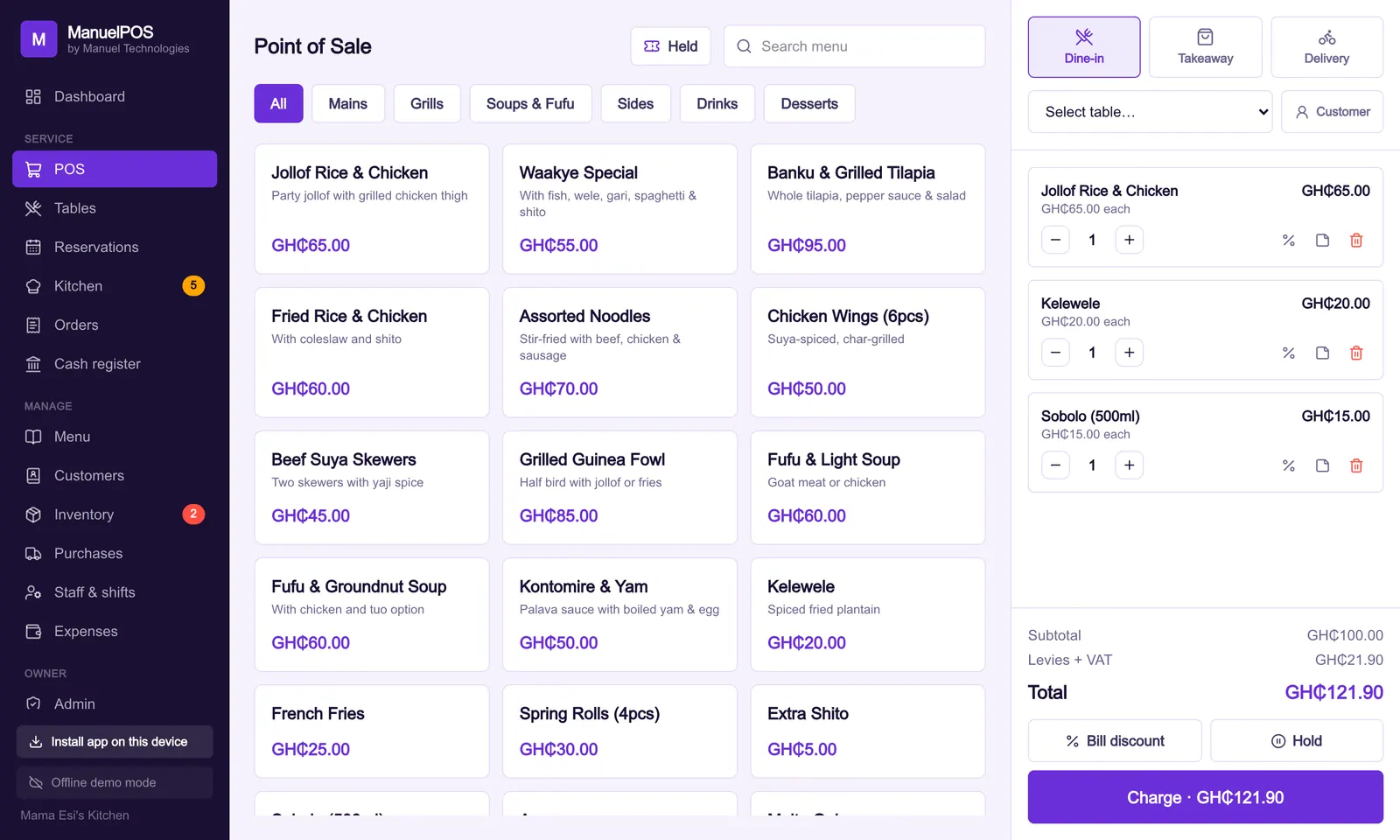
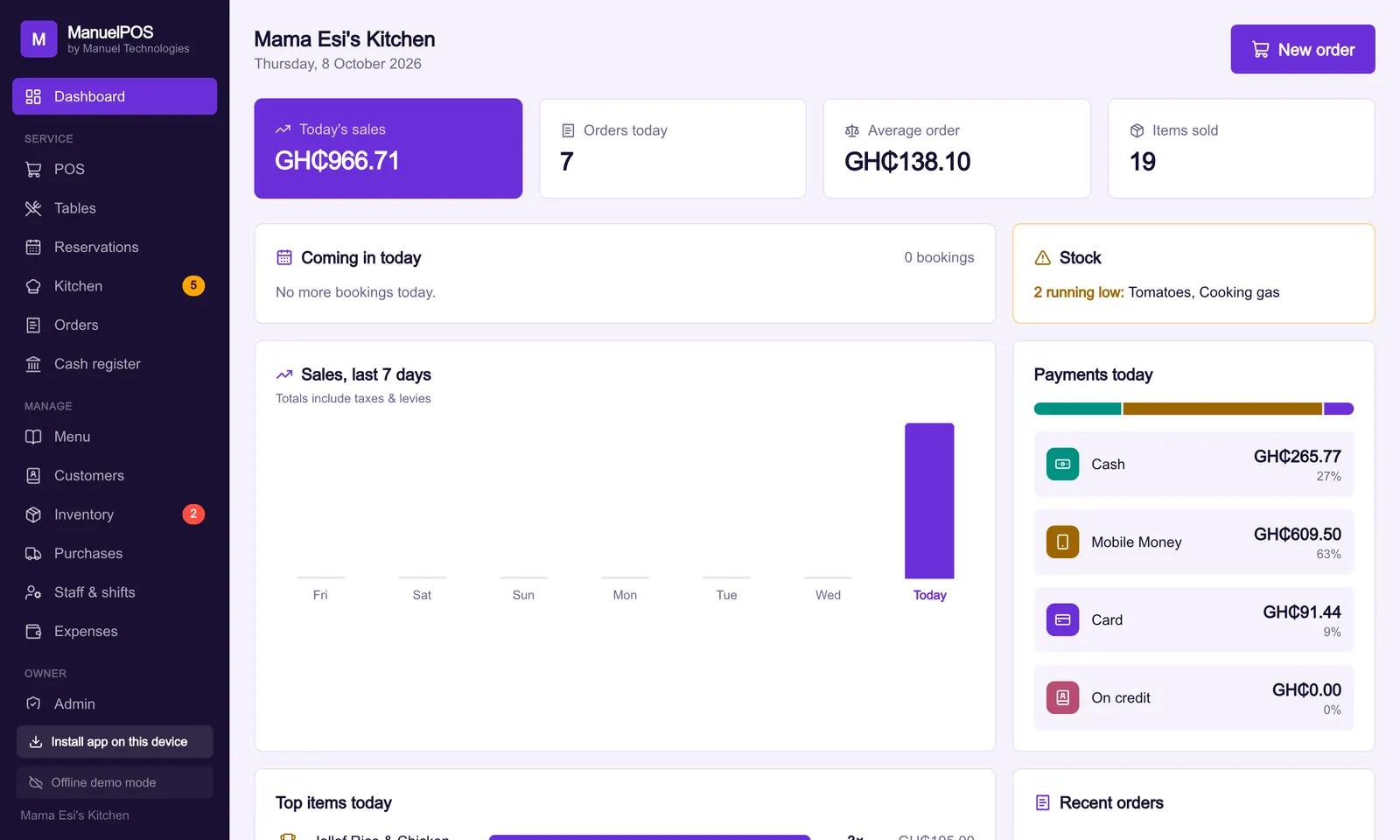
In MPOS you can take payment on credit at the till against a named customer, or split a sale between cash, MoMo and credit. Each customer has a credit balance, a statement and debt ageing, and you can send debt reminders by SMS or WhatsApp. Every sale is recorded against the person who made it, and the dashboard shows how much of the day's sales went on credit.
To set up your own credit customers, start a free trial. For the rest of the setup, read the complete guide to running a shop in Ghana, and for wholesale buyers on credit, retail and wholesale prices and margins.
See it with your own products
Free for 14 days. No card needed. Works on the phone or laptop you have.
FAQ
Frequently asked questions
Quick answers to what business owners ask us about this.
How do I keep track of customers who owe my shop?
Record every credit sale at the till against the customer's name, with a receipt showing the new balance. Then review a list of balances sorted by age each week, and chase the oldest first.
How much credit should I give a customer?
Set a limit from what they usually buy and how they have paid before. Start small, raise it when they pay on time, and keep the total on credit within what your cash flow can carry.
What is debt ageing?
It sorts what customers owe by how long it has been owed, such as under 30, 30 to 60, 60 to 90 and over 90 days. The older a debt, the harder it is to collect, so chase those first.
How do I remind a customer to pay without losing them?
Send a short, friendly message on the agreed day with the exact balance and how to pay, by SMS or WhatsApp. Never shame customers in public.
Should I keep selling to a customer who owes me?
Serve them for cash or MoMo, but pause new credit until they are back within their limit and payment day.
Still have a question?
Talk to the team on WhatsApp: real people in Ghana who know your kind of business.
About the author
Emmanuel Akyeam is the founder of Manuel Technologies in Ghana, which builds MPOS: the till, bookings and stock system for restaurants, salons, barbershops and shops. He works directly with business owners to set up their systems.
You may also like
- Shops and retail
Selling by carton, pack and single piece without losing count
How to set up cartons, packs, half cartons and single pieces in your shop so prices are right, stock adds up and the till stays fast.
21 October 2026 · 6 min read
- Shops and retail
Barcodes for a Ghanaian shop: getting them, printing tags, fixing duplicates
Which barcodes a shop can scan, when you need GS1 Ghana codes, how to print your own price tags, and what to do when two products share a barcode.
21 October 2026 · 6 min read