The short answer
First expiring, first out (FEFO) means you always sell the stock with the earliest expiry date before identical stock with a later date. In practice you record the expiry date of each batch when it arrives, put the earliest dates at the front of the shelf, check dates on a schedule, and take expired goods off the shelf and out of stock straight away.
Key takeaways
- FEFO: sell the earliest expiry date first, even if it arrived later.
- Record the expiry date of each batch when the delivery arrives.
- Put the earliest dates at the front of the shelf and newer stock behind.
- Keep expired, damaged and returned goods apart and clearly marked.
- Do not accept deliveries that will expire before customers can use them.
An expired tin on the shelf costs you twice. You lose what you paid for it, and you lose a customer's trust when they find it at home. For cosmetics and creams, the risk is to someone's skin.
Ghana's Food and Drugs Authority (FDA) regulates the sale of food, drugs, cosmetics and household chemical substances under the Public Health Act, 2012 (Act 851), and expired products must not be offered to customers. This guide shows how to keep that under control in a busy shop, without spending your days reading labels.
What is first expiring, first out?
First expiring, first out, or FEFO, is a way of moving stock so that the items with the earliest expiry date go first. The FDA's guideline for food storage facilities defines it as a procedure that ensures "the stock with the earliest expiry date is distributed and/or used before an identical stock item with a later expiry date".
FEFO is different from first in, first out (FIFO). FIFO sells what arrived first. Usually that is the same thing, but not always: a supplier can deliver an older batch after a newer one. FEFO follows the date on the pack, not the date of delivery.
60 tins
- Expires in 2 monthsGH₵12.00 (20%)
- Expires in 6 monthsGH₵24.00 (40%)
- Expires in 12 monthsGH₵24.00 (40%)
Source: Example figures
In this example, the 12 tins that expire soonest go at the front, even if they came in the latest delivery.
What does the FDA guidance say?
The FDA's Guidelines for the Establishment of a Food Storage Facility (document FDA/FID/CP-DFW/2020/01, issued May 2020) are written for warehouses and distributors, but they set out good habits any shop can copy. Among other things, they say:
- A system shall be in place so that food products due to expire first are sold or distributed first (FEFO).
- Rejected, expired, recalled or returned products and suspected counterfeits shall be stored apart, physically or by a validated electronic system, and clearly identified.
- The batch number and expiry date of food products shall be recorded when they are received.
- Food products shall not be supplied or received after their expiry date, or so close to it that the date is likely to pass before the consumer uses them.
These rules are for storage facilities. For the rules that apply to your own shop, including cosmetics and any medicines, check with the FDA directly, as of October 2026.
Expiry date or best before?
An expiry date is the date up to which a product is expected to stay wholesome if stored correctly. The FDA guideline says it is set for each batch by adding the shelf life to the date of manufacture. A "best before" date is about quality rather than safety, and the meaning depends on how it is used on that label. Treat an expiry date as a hard stop. If a label is unclear, ask the supplier or the FDA.
How do you put FEFO into practice?
You put FEFO into practice at three points: when stock arrives, when you fill the shelf, and when you check dates.
- Check expiry dates at the door
- Refuse stock that is too close to its date
- Record the batch and expiry date
- Put the earliest date at the front
- Check dates on a fixed day each week
- Remove anything expired and record it
At the door
Check the dates before the driver leaves. Agree with your suppliers how much life you want left on a delivery, and refuse cartons that will not sell in time. Write the expiry date on the carton in big numbers with a marker, so whoever fills the shelf sees it.
On the shelf
Bring old stock forward and put new stock behind. Never pile new stock in front of old just because it is quicker. In a beauty shop, the same applies to creams, relaxers, lotions and hair food: the jar at the front should be the one that expires first.
Checking dates
Pick one section a day or one day a week and check its dates. Do it as part of your stock take, since you are already touching every item.
Which goods need the closest watch?
The goods that need the closest watch are those that sell slowly and have short shelf lives. In most provision and beauty shops these are:
| Goods | Why they need watching |
|---|---|
| Dairy, yoghurt, fresh bread | Short shelf life, often weeks or days |
| Baby food and formula | Costly, and parents check dates |
| Tinned fish and tomato paste | Sold in bulk, so old batches hide at the back |
| Creams, lotions and relaxers | Slow movers, and the date can be hard to read |
| Opened sacks of rice or flour | Damp and pests as well as dates |
What should you do with expired goods?
Take expired goods off the shelf at once, keep them in a separate, marked place where they cannot be sold by mistake, and record them as a loss so your stock figures stay true. Ask your supplier whether they will take short-dated or expired goods back, and agree that in writing before it happens.
Do not sell expired goods at a discount. Expired products must not be offered to consumers at all, and the FDA is the national authority that enforces food safety, and district environmental health units have also inspected shops and seized expired goods. For how to dispose of them safely, ask the FDA or your district environmental health office.
Sell short-dated stock before it expires
The cheapest expired item is the one you sold in time. Each week, look at what will expire in the next one to two months and act:
- Move it to the counter or the front of the shop.
- Sell it as a bundle with a fast mover.
- Lower the price a little while it still has life left, and say how long.
- Order less of it next time.
How MPOS tracks expiry dates
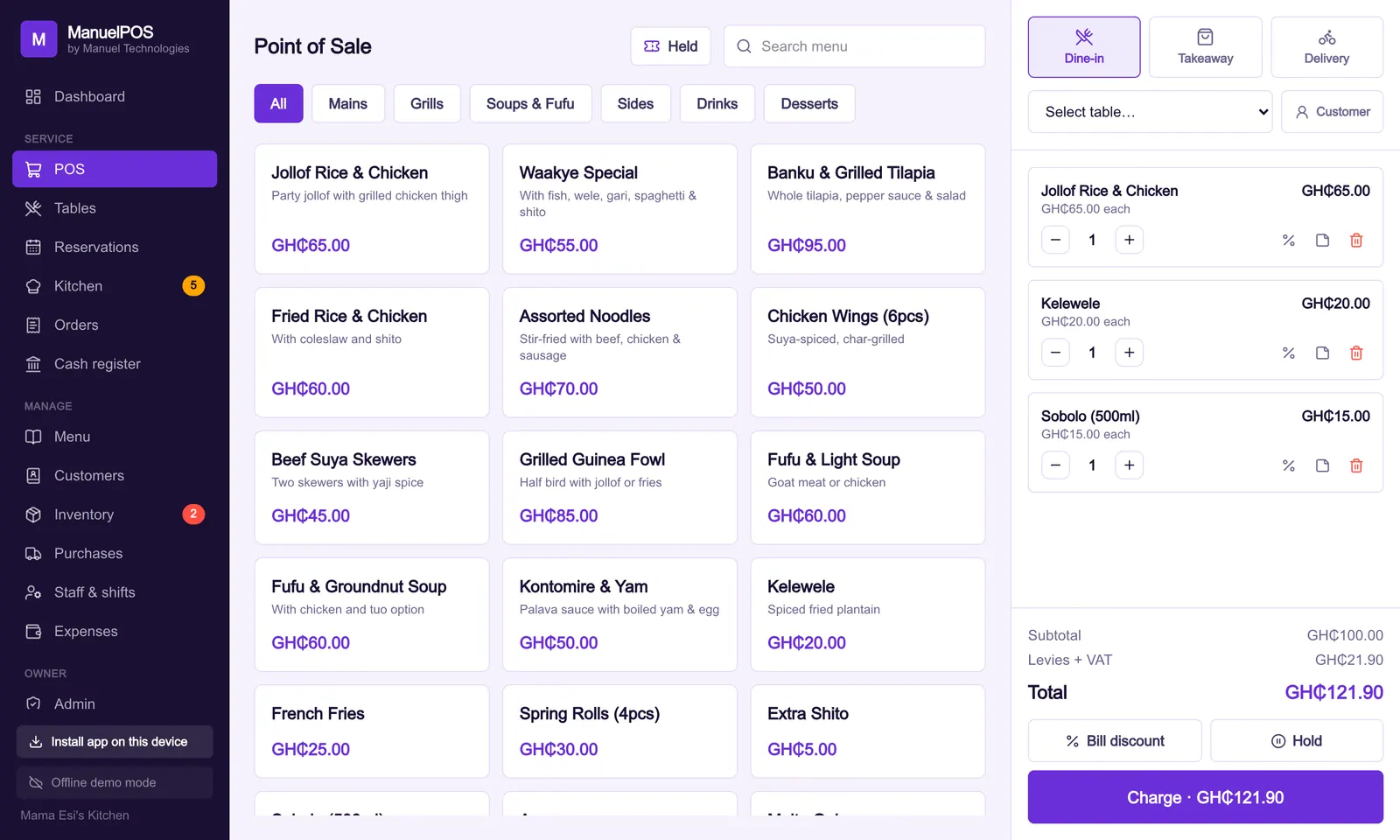
In MPOS you record each delivery's batch number and expiry date when you receive the stock, and the till sells the first-expiring batch first. You can see stock per branch, get low-stock warnings, and record supplier returns when a supplier takes back short-dated goods.
To see it on your own stock, start a free trial. For the whole setup of a shop, read the complete guide to running a shop in Ghana.
See it with your own products
Free for 14 days. No card needed. Works on the phone or laptop you have.
Sources
FAQ
Frequently asked questions
Quick answers to what business owners ask us about this.
What is FEFO?
First expiring, first out. You sell the stock with the earliest expiry date before identical stock with a later date, whatever order it arrived in.
What is the difference between FEFO and FIFO?
FIFO sells what arrived first. FEFO sells what expires first. They are often the same, but when an older batch arrives after a newer one, FEFO follows the date on the pack.
Can I sell expired goods at a discount in Ghana?
No. Expired products must not be offered to customers at any price. Take them off the shelf and record them as a loss.
How often should I check expiry dates?
Check one section a day or one day a week, so every shelf is checked at least monthly, and check more often for dairy, bread, baby food and slow-moving cosmetics.
What should I do with expired stock?
Remove it at once, keep it apart and clearly marked, record it as a loss, and ask your supplier about returns. Ask the FDA or your district environmental health office how to dispose of it.
Still have a question?
Talk to the team on WhatsApp: real people in Ghana who know your kind of business.
About the author
Emmanuel Akyeam is the founder of Manuel Technologies in Ghana, which builds MPOS: the till, bookings and stock system for restaurants, salons, barbershops and shops. He works directly with business owners to set up their systems.
You may also like
- Shops and retail
Selling by carton, pack and single piece without losing count
How to set up cartons, packs, half cartons and single pieces in your shop so prices are right, stock adds up and the till stays fast.
21 October 2026 · 6 min read
- Shops and retail
Barcodes for a Ghanaian shop: getting them, printing tags, fixing duplicates
Which barcodes a shop can scan, when you need GS1 Ghana codes, how to print your own price tags, and what to do when two products share a barcode.
21 October 2026 · 6 min read