The short answer
To control expiry in a pharmacy or chemical shop, record the batch number and expiry date of every delivery, sell the batch that expires first (first-expiring, first-out), check short-dated stock every month, and take expired stock off the shelf at once and keep it apart until it is disposed of properly.
Key takeaways
- Expired stock is lost money, and the Pharmacy Council lists displaying and supplying expired medicines among the offences it sanctions.
- Record the batch number and expiry date when a delivery arrives, not later.
- Sell first-expiring, first-out (FEFO), even when a newer delivery has a longer date.
- Walk the shelves once a month and mark anything expiring within three months.
- Expired stock comes off the shelf the same day and is kept apart until disposal.
On this page8 sections
- 01Why does expiry tracking matter so much in a pharmacy?
- 02What is first-expiring, first-out?
- 03How do you record batches and expiry dates?
- 04How often should you check for short-dated stock?
- 05What can you do with stock that is close to expiry?
- 06What should you do with expired medicine?
- 07How MPOS handles batches and expiry
- 08What to do next
Every pharmacy and chemical shop owner knows the feeling: you reach for a box at the back of the shelf and the date passed two months ago. That box was paid for in cash. It can no longer be sold, and if a customer had bought it, the problem would be much bigger than the money.
Expiry control is not hard. It is a few habits at the door, on the shelf and at the till, done every week without fail. This article covers the stock-keeping side only. Questions about which medicine a customer should take belong with your pharmacist.
Why does expiry tracking matter so much in a pharmacy?
Expiry tracking matters because expired medicine is both a loss and a regulatory risk. The Pharmacy Council's guidelines for pharmacies list the "display and supply of expired, unregistered, fake and substandard medicines" among the offences that attract sanctions. They also make it the superintendent pharmacist's duty to keep shelves and stocks rid of "deteriorated, expired, banned, fake and substandard medicines".
The Council's guidelines for licensed over-the-counter medicine sellers set the same duty for chemical shops. So whether you run a retail pharmacy in Osu or a licensed chemical shop in a farming town, the rule on your shelves is the same.
Then there is the money. A small shop can easily carry several thousand cedis of medicines. If a tenth of that runs out of date each year, you have handed that profit back to your suppliers.
What is first-expiring, first-out?
First-expiring, first-out (FEFO) means you always sell the stock with the earliest expiry date first, whatever order it arrived in. It is different from first-in, first-out (FIFO), which sells the oldest delivery first.
Most of the time the two give the same answer. They differ when a supplier sends a newer delivery with a shorter date than the stock you already have. FEFO protects you in that case.
| Method | What you sell first | When it goes wrong |
|---|---|---|
| First-in, first-out | The oldest delivery | A new delivery arrives with a shorter date and sits at the back |
| First-expiring, first-out | The earliest expiry date | Only if the dates were never recorded |
| No method | Whatever is nearest the front | Short-dated boxes hide behind new ones |
On the shelf, FEFO means putting the shortest-dated boxes at the front and the longest-dated at the back. In your records, it means every batch carries its own expiry date.
How do you record batches and expiry dates?
Record the batch number, expiry date and quantity for each product when the delivery arrives, while the supplier's invoice is in your hand. If you leave it for later, it does not get done.
- Count each line against the supplier invoice
- Check the expiry date on every product
- Refuse or query anything already short-dated
- Enter batch number, expiry and quantity
- Put new stock behind the older dates
- File the invoice with the delivery record
Two practical points:
- One product, several batches. The same tablets can sit on your shelf in two or three batches with different dates. Each batch needs its own line, not one total.
- Agree short-dated terms with suppliers. Before you accept a delivery, ask how much shelf life is left. Some owners refuse stock with less than a set number of months to go. Agree your rule with each supplier in advance, and ask whether they will take back short-dated stock.
How often should you check for short-dated stock?
Check once a month. Walk the shelves and the store, look at the date on every product, and mark anything that expires within the next three months. A coloured sticker works well: red for under three months, yellow for three to six.
Then look at what you found as money, not just boxes. A simple tally by months left shows you where the risk is.
Source: Example figures
In this example, GH₵640 of stock must sell within three months or be written off. That is the list to act on this week.
What can you do with stock that is close to expiry?
Act early, while the stock can still be sold or returned. The options, in order:
- Move it to the front so it sells before newer stock.
- Ask the supplier whether they accept returns or swaps of short-dated stock. Some do, if you ask in good time.
- Stop reordering that line until the short-dated stock has gone.
- Order less next time. Repeated short-dated stock on the same line usually means you are buying more than you sell. Your sales report tells you how many you really sell in a month.
What you should never do is relabel, repack or hide a date. Selling a product past its expiry date is exactly what the regulator's rules are there to stop.
What should you do with expired medicine?
Take it off the shelf the same day, record it as a write-off, and keep it in a separate, clearly marked box or area until it is disposed of. That way it cannot be sold by mistake, and your stock records stay true.
For disposal, follow the regulations and ask the regulator how it should be done for your type of premises. The Food and Drugs Authority (FDA) runs a Take Back Unwanted Medicines programme for consumers, which it says is being piloted in fifty community pharmacy shops in Greater Accra. For your own expired stock, check the current requirements with the Pharmacy Council or the FDA directly. Our guide to who regulates what in a pharmacy explains which body covers which part.
How MPOS handles batches and expiry
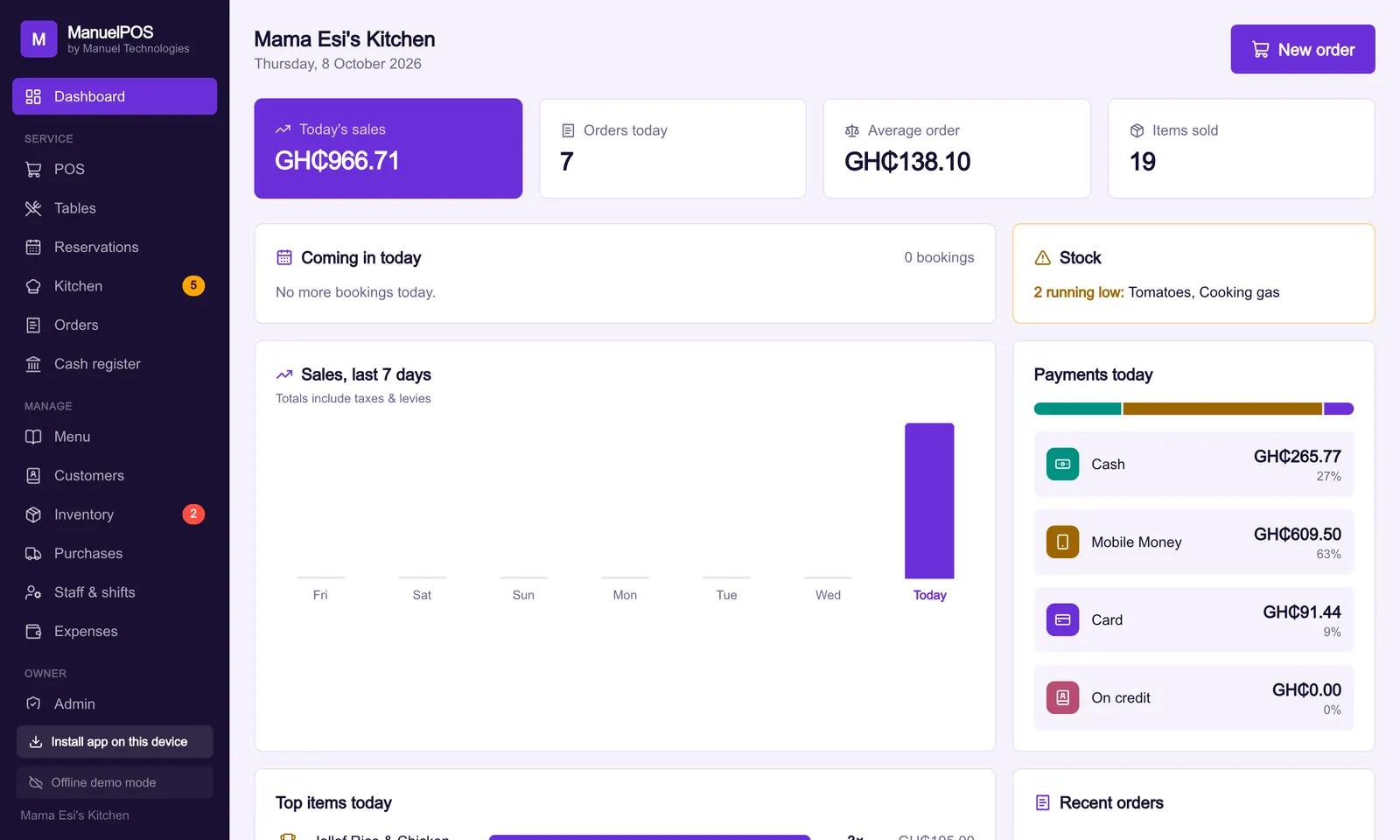
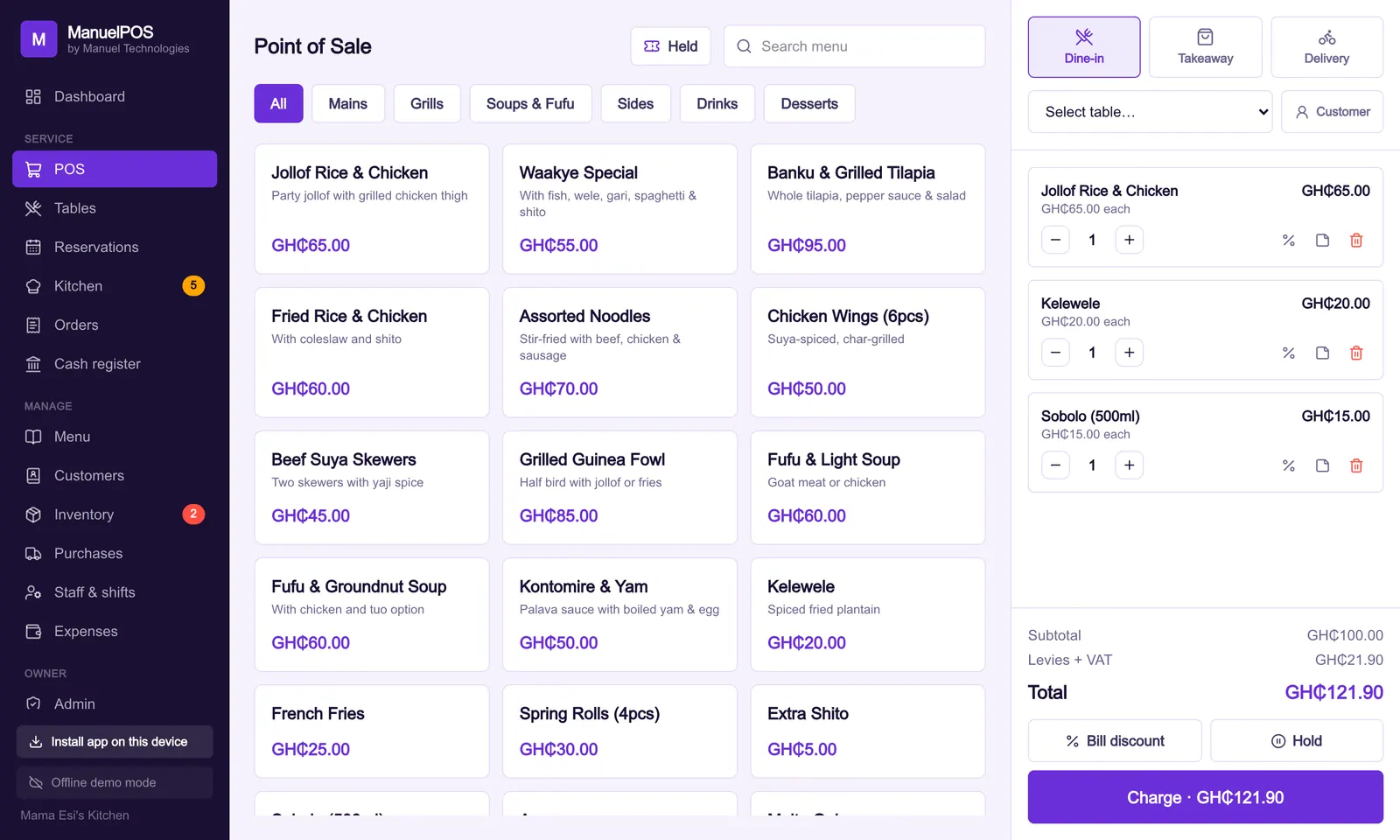
MPOS keeps batches with their expiry dates for each product, and sells first-expiring-first, so the till takes stock from the batch with the earliest date. You record the batch number and expiry date when you receive the stock, and a return to the supplier can be taken from a particular batch.
Stock and batches are kept per branch, and each branch sees a list of batches that expire within 30 days. Stock takes are done by scanning, which makes the monthly count quicker, and low-stock warnings tell you when a line is running out so you reorder what is selling rather than what is sitting.
MPOS is a stock and sales system. It does not keep prescription records or a controlled-drugs register, so keep those in the form your regulator requires.
What to do next
Start with the shelf walk this week: date every product and add up the value of anything under three months. Then set up the delivery routine above so the next batch is recorded properly from the day it arrives.
If you sell medicines by the strip as well as the box, read selling by box, strip and tablet next, or go back to the complete guide to running a pharmacy in Ghana. If you want to see batches and first-expiring-first selling on your own products, you can start a free trial.
See it with your own products
Free for 14 days. No card needed. Works on the phone or laptop you have.
Sources
FAQ
Frequently asked questions
Quick answers to what business owners ask us about this.
What is the difference between FIFO and FEFO?
FIFO (first-in, first-out) sells the oldest delivery first. FEFO (first-expiring, first-out) sells the stock with the earliest expiry date first. For medicines, FEFO is safer because a newer delivery can have a shorter date.
How often should a pharmacy check expiry dates?
A monthly check of every shelf and the store is a good habit, marking anything due to expire within three months. Check dates again on every delivery before you accept it.
What should I do with expired medicines in my shop?
Remove them from the shelf the same day, record them as a write-off and keep them apart, clearly marked, so they cannot be sold. For disposal, follow the regulations and check current requirements with the Pharmacy Council or the FDA.
Can a POS sell from the batch that expires first?
MPOS can. Each product can carry several batches with their own expiry dates, and the till sells the earliest-expiring batch first.
Does MPOS keep a controlled-drugs register?
No. MPOS records sales, stock, batches and expiry dates, but it does not keep prescription records or a controlled-drugs register. Keep those as your regulator requires.
Still have a question?
Talk to the team on WhatsApp: real people in Ghana who know your kind of business.
About the author
Emmanuel Akyeam is the founder of Manuel Technologies in Ghana, which builds MPOS: the till, bookings and stock system for restaurants, salons, barbershops and shops. He works directly with business owners to set up their systems.
You may also like
- Pharmacies
Pharmacy Council or FDA: who regulates a pharmacy in Ghana?
Who licenses pharmacies and chemical shops in Ghana, who registers the medicines on the shelf, what the published guidelines say, and where to check.
21 October 2026 · 7 min read
- Pharmacies
Selling medicine by the box, strip and tablet at the right price
How a pharmacy or chemical shop can sell the same medicine by the box, strip or tablet, keep prices right for each, and keep stock counts true.
21 October 2026 · 6 min read