The short answer
Commission shares both busy and quiet months between the salon and the stylist, chair rent gives the salon a fixed income while the stylist keeps the rest, and a salary gives the stylist a fixed income while the salon carries the risk. Many salons pay a small base plus commission, but whichever you choose, record who did each service so the numbers are fair.
Key takeaways
- Commission moves with sales, so quiet months are shared.
- Chair rent gives the salon a fixed income but less say over prices and hours.
- A salary is steady for the stylist; the salon carries the quiet months and the PAYE and SSNIT duties.
- Base plus commission is a middle path many owners prefer.
- Whatever you choose, record the stylist on every sale and pay from the report.
On this page8 sections
Pay is the most common reason good stylists leave a salon, and arguments about it often start with a notebook. Somebody forgot to write down a set of braids. Somebody else wrote down a client twice. At the end of the month, nobody fully trusts the total.
There are four common ways to pay stylists and barbers in Ghana: commission, chair rent, salary, and a base pay plus commission. None of them is right for every salon. This guide shows how each one works with the same example numbers, so you can see who carries the risk in a quiet month. All the figures are examples, not market rates. Agree your own rates with your staff, in writing.
How does each way of paying work?
Commission pays the stylist a share of what they bring in. Chair rent means the stylist pays the salon a fixed amount and keeps their takings. A salary is a fixed amount whatever the sales. Base plus commission is a smaller fixed amount with a share of sales on top.
| Way of paying | Stylist gets | Salon gets | Who carries a quiet month |
|---|---|---|---|
| Commission | A share of their service sales | The rest | Both, in proportion |
| Chair rent | Everything they take, less the rent | The fixed rent | The stylist |
| Salary | A fixed amount | Everything above the salary | The salon |
| Base plus commission | A smaller fixed amount plus a smaller share | The rest | Mostly the salon, partly the stylist |
A worked example: a busy month and a quiet month
Take one stylist at an example salon in Kumasi. In a busy month (December, say) her services bring in GH₵6,000. In a quiet month they bring in GH₵3,000. Here is what each way of paying gives her and the salon, using example rates:
- Commission at 40%
- Chair rent of GH₵1,200 a month
- Salary of GH₵1,800 a month
- Base of GH₵800 plus 20% commission
| Way of paying | Busy month: stylist | Busy month: salon | Quiet month: stylist | Quiet month: salon |
|---|---|---|---|---|
| Commission 40% | GH₵2,400 | GH₵3,600 | GH₵1,200 | GH₵1,800 |
| Chair rent GH₵1,200 | GH₵4,800 | GH₵1,200 | GH₵1,800 | GH₵1,200 |
| Salary GH₵1,800 | GH₵1,800 | GH₵4,200 | GH₵1,800 | GH₵1,200 |
| Base GH₵800 + 20% | GH₵2,000 | GH₵4,000 | GH₵1,400 | GH₵1,600 |
The salon's column is before rent, light, products and other costs, which the salon still pays (except, under chair rent, whatever the agreement says the stylist covers).
Source: Example figures
The example shows the pattern. Under chair rent the salon's income never moves, so a busy December mostly benefits the stylist. Under a salary the stylist's income never moves, so a quiet month mostly hurts the salon. Commission sits between the two.
When does commission work best?
Commission works best when the salon brings the clients, sets the prices and supplies the products. The stylist earns more when they work more, and the salon is not paying a full wage in a quiet month.
The weakness is trust. A stylist on commission needs to see the sales behind their number. If you record the stylist on each sale at the till, each person's total and commission come from the same record the cash came from, and there is nothing to argue about.
Decide in advance whether commission is on the price before or after any discount, and whether it applies to product sales. Write it down.
When does chair rent make sense?
Chair rent suits experienced stylists who bring their own clients, keep their own diary and want to set their own hours. The salon gets a steady income and does less managing.
The salon also gives up control. A stylist who rents a chair may set their own prices and come and go as they choose, which can confuse clients who think of your salon as one business. Agree in writing what the rent covers: the chair only, or also light, water, washing products and a place on your booking page.
Chair rent is the one model where the salon does not need the stylist's sales to pay them. It still helps to record those sales if the stylist's clients pay at your till, so the money is clearly theirs and not yours.
What does paying a salary involve?
A salary gives the stylist a steady income, which can help you keep a good junior stylist or an assistant who washes, plaits and cleans. It also brings duties. GRA explains that PAYE is deducted from an employee's income and paid by the employer, with monthly returns due by the fifteenth of the following month, and its PAYE page lists the SSNIT deduction of 5.5% of basic salary.
The National Tripartite Committee set the 2026 national daily minimum wage at GH₵21.77 from 1 January 2026. Check that any salary or base pay is above it. As of October 2026, confirm current rates with GRA and SSNIT, or ask an accountant, before you agree a salary. MPOS does not run payroll, PAYE or SSNIT: it gives you the sales figures, and your payroll is done separately.
Is base plus commission the best of both?
For many salons it is a sensible middle path. The base gives the stylist some security in a quiet month, and the commission rewards the busy months. The salon pays less in a quiet month than with a full salary, and keeps more in a busy month than with high commission.
Set the base low enough that the salon can pay it in the quietest month of the year, and set the commission so the total in a normal month is fair to the stylist.
How do you make any system fair?
Whatever you choose, three habits keep it fair.
- Put the agreement in writing
- Record the stylist on every sale at the till
- Let each stylist see their own sales
- Pay from the report, not a notebook
- Review the rates once a year
If two people work on one client, such as a stylist and an assistant on a long set of braids, agree in advance whose sale it is, or split the service into two lines on the bill.
How MPOS helps
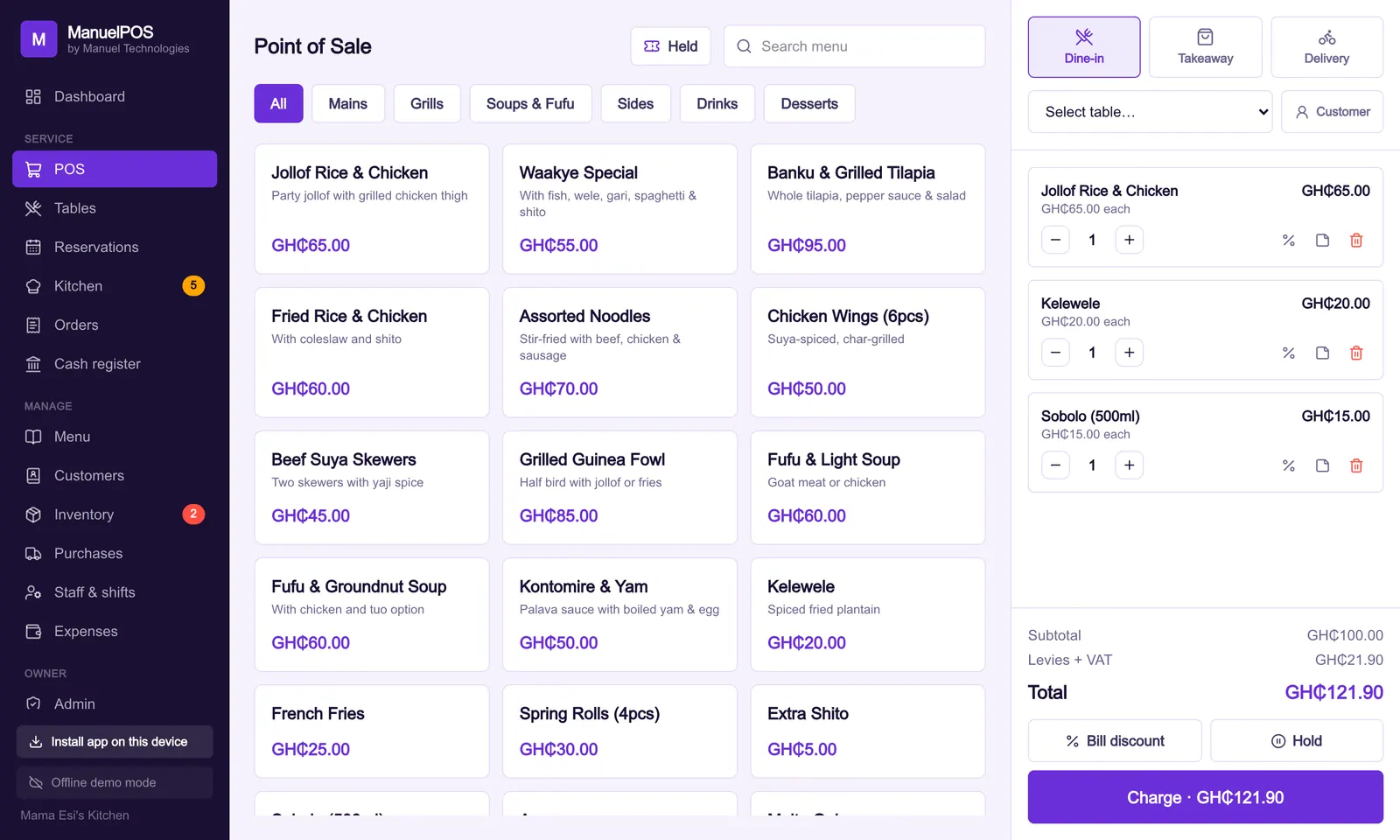
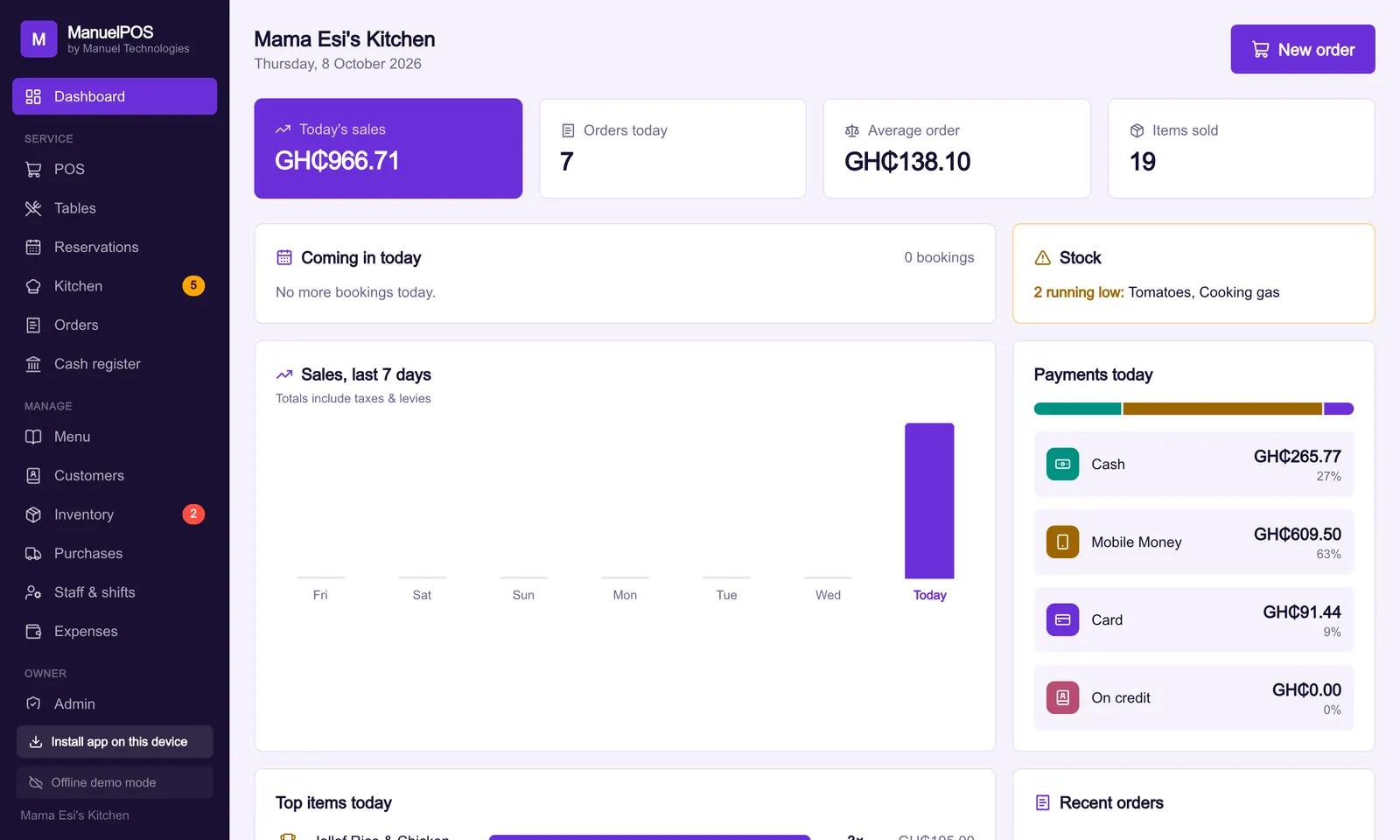
MPOS records which staff member served the client on each bill when it is paid. You set a commission rate for each staff member, and the staff report shows each person's sales and commission for any period, worked out on the value of their bills before tax, so a commission or base-plus-commission payday takes minutes. It records one staff member per bill, and anything else on that bill, such as a pack of hair, counts towards their total. Each person has their own login, so a stylist can only do what their role allows, and voids and big discounts need a manager.
For walk-ins and queues, see keeping a barbershop queue fair and commission right. To make sure the price itself leaves room for commission, read how to price braids and salon services. The complete guide to running a salon or barbershop covers the rest. You can start a free trial to see the staff report with your own services.
See it with your own products
Free for 14 days. No card needed. Works on the phone or laptop you have.
Sources
FAQ
Frequently asked questions
Quick answers to what business owners ask us about this.
Is commission or salary better for a salon?
Commission shares quiet months between you and the stylist, while a salary puts the risk on the salon. Many salons choose a small base plus commission as a middle path.
What is chair rent in a salon?
The stylist pays the salon a fixed amount, usually each week or month, and keeps what they take from their clients. The salon's income is steady, but it has less say over prices and hours.
Should stylists get commission on product sales?
That is your choice. Decide in advance and write it down, together with whether commission is worked out before or after discounts.
Do I need to deduct PAYE and SSNIT for salon staff?
If you employ someone on a salary, GRA says PAYE is deducted and paid by the employer, and SSNIT is deducted from basic salary. Check your own position with GRA and SSNIT or an accountant.
Can MPOS work out commission?
Yes. Set a commission rate for each staff member, record who served the client when the bill is paid, and the staff report shows each person's sales and commission for any period. It does not run payroll.
Still have a question?
Talk to the team on WhatsApp: real people in Ghana who know your kind of business.
About the author
Emmanuel Akyeam is the founder of Manuel Technologies in Ghana, which builds MPOS: the till, bookings and stock system for restaurants, salons, barbershops and shops. He works directly with business owners to set up their systems.
You may also like
- Salons and barbers
How to price braids and salon services by length and time
A step-by-step way to price knotless braids, cornrows, nails and other services by length and time, with a worked GH₵ example you can copy.
21 October 2026 · 7 min read
- Salons and barbers
Tracking hair products and retail stock in a salon
How a salon or barbershop keeps braiding hair, wigs, creams and the products used in services under control, with a weekly count and a worked GH₵ example.
21 October 2026 · 6 min read